


The Gormenghast Novels
 by Mervyn Peake take place in the remote kingdom of Gormenghast and focus on the intrigues that unfold within the huge, isolated Castle Gormenghast and its environs. The three novels--Titus Groan
 (1949), Gormenghast
 (1950), and Titus Alone
 (1959)--follow the main character, Titus Groan, from birth to manhood and chronicle his role as the reluctant ruler of Gormenghast. Titus's closest relative is his sister, Fuchsia, who has an erratic nature and is given to melancholy since the death of their father. In the second novel, Fuchsia learns that the man she loves--the villainous Steerpike--is a murderer, and briefly contemplates suicide. Standing on a window ledge above rising flood waters, she is startled by a knock on the door, loses her footing, and falls, striking her head on the way down. Unconscious, she drowns in the water below. This scene is depicted in the song The Drowning Man
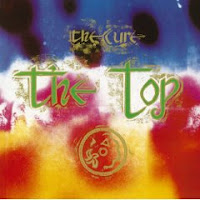
 , from The Cure's 1981 album Faith
 : Starting at the violent sound/She tries to turn/But final/Noiseless/Slips and strikes her soft dark head/The water bows/Receives her/And drowns her at its ease. The lyrics even mention her by name: Oh Fuchsia!/You leave me/Breathing like the drowning man. The Gormenghast Novels are usually referred to as a trilogy because only three were published (the third book, Titus Alone, was unfinished at the time of Peake's death and was completed by another hand). However, Peake wrote a novella called Boy in Darkness
 (1956) that relates a short episode involving Titus as a young boy. He also planned at least two more volumes in the main series, tentatively titled Titus Awakes and Gormenghast Revisited. Peake's heirs recently discovered a draft of Titus Awakes written by the author's widow during the 1970s, and are planning to have it published in 2011.


 song list, a number of readers weighed in with additional musical references to author J.D. Salinger, who died on January 27th. Most of them bend our
  features a song called
  . Robert Smith, the band's primary songwriter, confirmed the song's connection to Salinger's story "A Perfect Day for Bananafish," from his collection
  , in an issue of the fanzine
  ." The guitarist in question is Frank Iero. The name of the band and the name of the song both derive from The Catcher in the Rye. Pencey Prep is the fictional school from which Holden Caulfield is expelled; and "The Secret Goldfish" is the title of a short story referred to in the novel, written by Holden's brother D.B. The song appears on the band's 2001 album
  .
. --a reference to Salinger's story "For Esmé with Love and Squalor," available in the Nine Stories collection.
 , from Ride's 1990 album
  , mentions Salinger's
  . The same story lent its name to "
 , from the 2001 album
  . The song's title comes from Holden Caulfield's description of his sister, Phoebe, in The Catcher in the Rye: "She's quite skinny, like me, but nice skinny. Roller-skate skinny. I watched her once from the window when she was crossing over Fifth Avenue to go to the park, and that's what she is, roller-skate skinny."
 .
. .
.

 , a single released by The Cure in 1981 and available on the 2005 reissue of the album
  , is based on the 1969 YA novel
  by Penelope Farmer. The story concerns Charlotte, a girl residing at a boarding school in 1963, who somehow exchanges identities with a girl named Clare, who lived at the same school in 1918--so, she is Charlotte sometimes, Clare others. Things get complicated when Charlotte becomes trapped in the past as Clare (and vice versa). The lyrics of the first verse approximate the novel's opening paragraph, and the song captures Charlotte's confused sense of identity (Sometimes I'm dreaming/So many different names) and emotional turmoil (She was crying and crying for a girl/Who died so many years before). Two other songs by The Cure, "Splintered in Her Head" (the B-side of the "Charlotte Sometimes" single) and
  , are also said to have been inspired by the book. (The novel also provided the stage name for the performer

 .
.


